


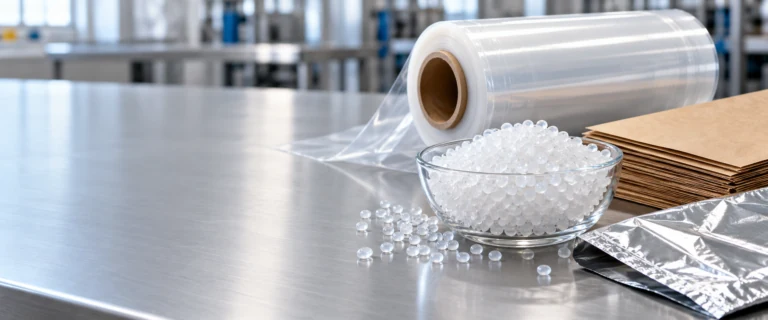

Polyethylene (PE)
A versatile, tough and flexible material widely used in mailing bags and packaging films.

Explore polymer material families used in mailing bags and flexible packaging. Choose by the required performance, printability and conversion process.
Review the complete material structure, processing requirements and supporting evidence before ordering.
Specify the layers and properties for the finished pack.
Review forming, printing and sealing compatibility.
Confirm evidence and sourcing scope for your order.
A versatile, tough and flexible material widely used in mailing bags and packaging films.

A balance of stiffness, clarity and heat resistance, depending on grade and film structure.

Dimensional stability and clarity; often used as a layer in composite packaging structures.
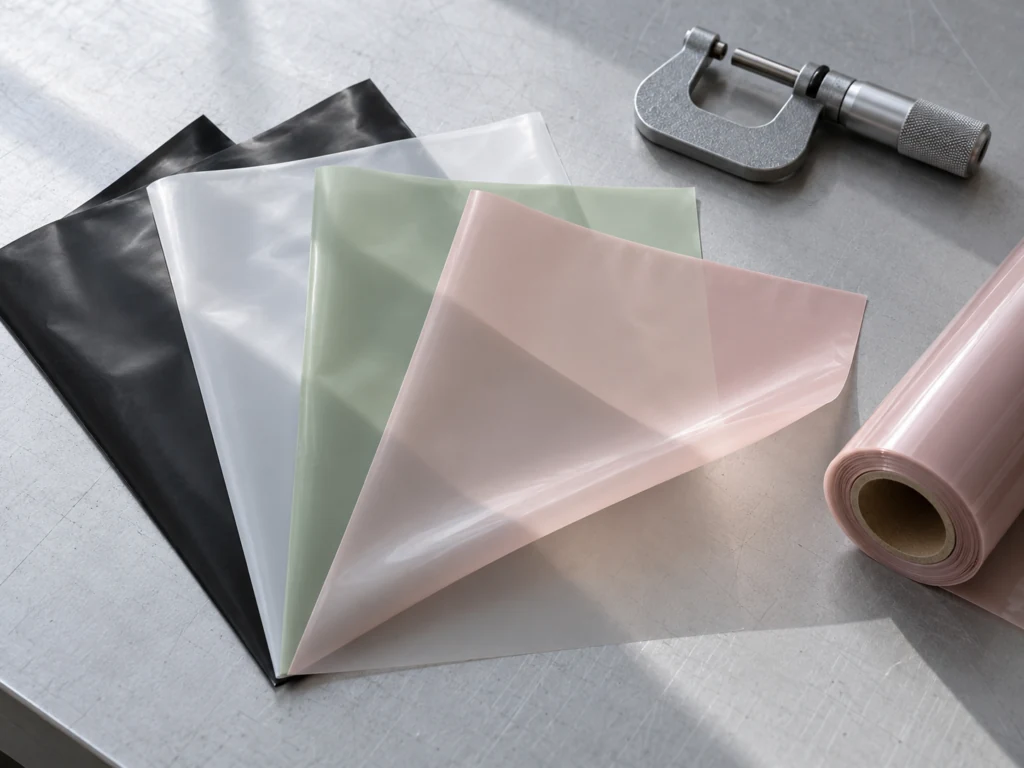
Toughness and abrasion resistance; used in selected multi-layer film structures.
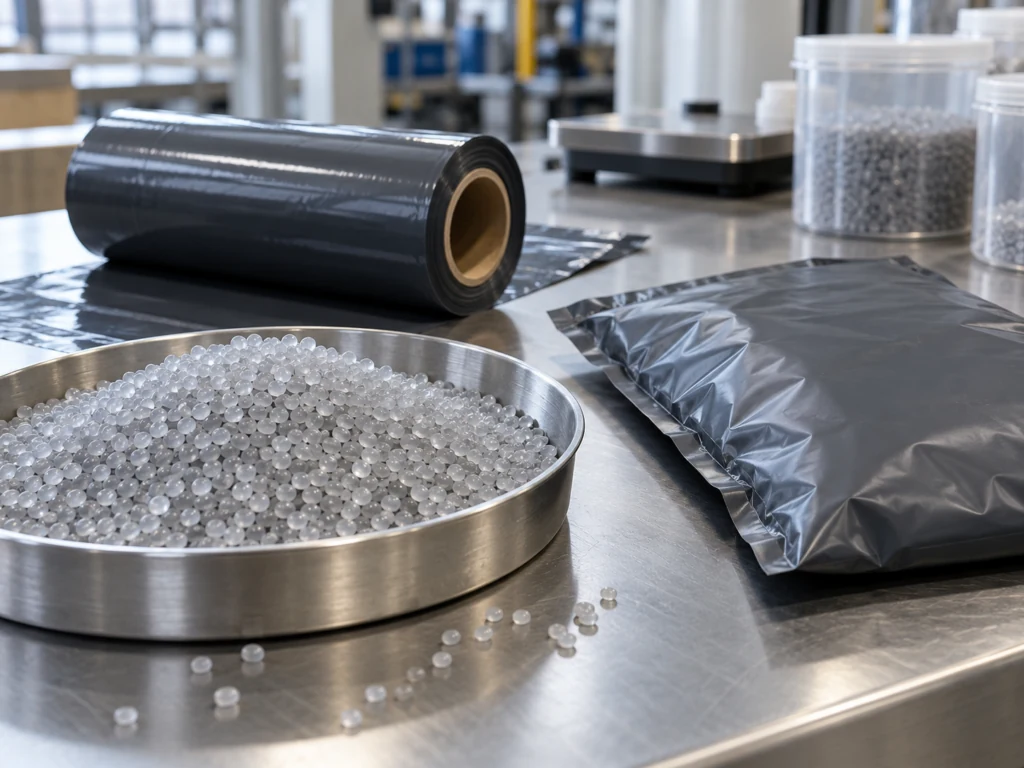
Grade-dependent flexibility and sealing performance for selected packaging structures.
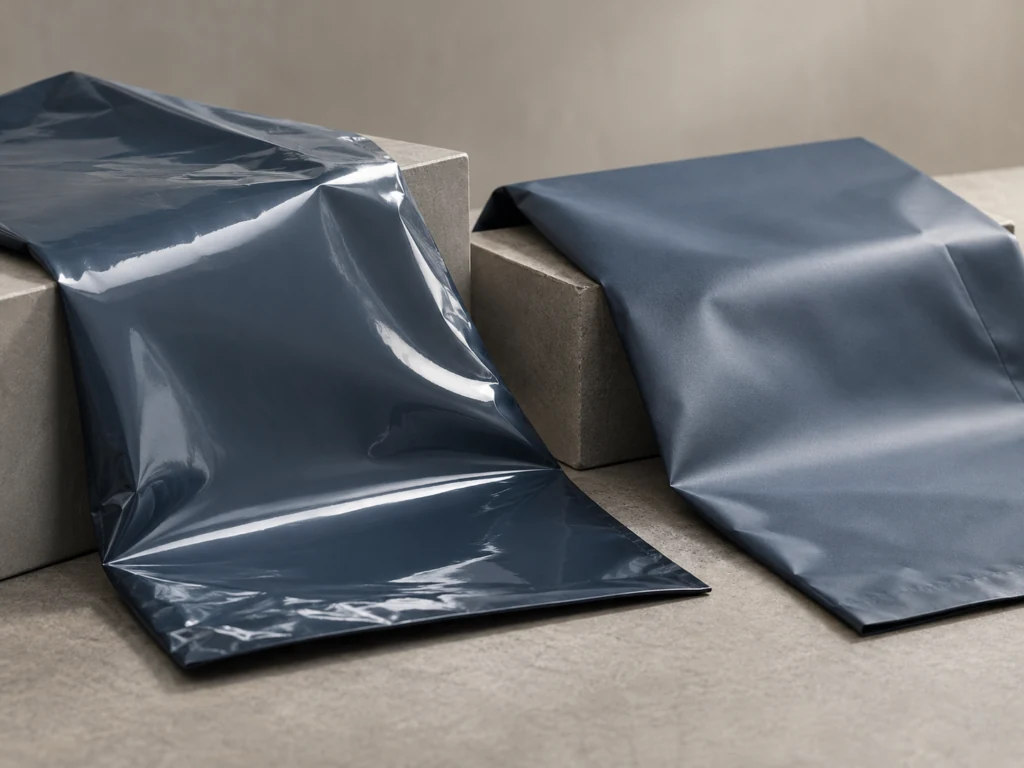
Used in selected packaging applications; suitability depends on formulation and end use.
Use this overview to discuss options. Exact specifications depend on the product structure and requirements.
| Material family | Key specification questions | Related packaging |
|---|---|---|
| Polyethylene (PE) | Flexibility, toughness, seal performance, printability? | Mailing bags and flexible films |
| Polypropylene (PP) | Stiffness, clarity, heat resistance, printability? | Selected retail and clear packaging |
| Polyester (PET) | Strength, dimensional stability, surface finish? | Multi-layer films and labels |
| Polyamide (PA) | Toughness, abrasion resistance, seal compatibility? | Multi-layer packaging films |
| EVA | Flexibility, low-temperature performance, sealability? | Specialty films and structures |
| PVC | Durability, clarity, formulation and restrictions? | Selected protective formats |
Each material family includes grades with varying properties. The right grade depends on product structure, printing method, sealing process and end-use conditions.
Resin-based films form the foundation of many flexible packaging structures. The right grade supports protection, functionality and print presentation through production, storage, transport and use.
Consider strength, flexibility, seal performance, print quality and the way the pack will be used. Some applications can use one material family, while others may need layers with different roles. Confirm the full construction and test method.
Choose around the packed product, weight, handling route and required appearance. Film thickness should be reviewed alongside material structure, opacity, seams and closure performance; a thicker film alone does not guarantee the right pack. State the thickness unit and whether you are referring to a single film wall.
Where no specification exists, share an existing bag or describe the performance you need. Compare proposed samples using the actual contents and agree the material, dimensions and acceptance criteria before placing the bulk order.
Include the requested recycled-content proportion and the evidence required by your purchasing team. Ask how the claim is defined and which documentation supports the proposed material. Colour, appearance and performance should be reviewed on a representative sample.
Recycled content and recyclability describe different things. Do not add disposal wording or environmental claims based only on a bag colour or appearance; confirm the material information and the collection guidance relevant to the destination before finalising printed messaging.
A flexible outer mailer provides no rigid structure by itself. Fragile products, sharp edges or concentrated loads may need a suitable inner box, cushioning or a different packaging format. Review the whole packed item and its handling route before deciding on a bag.
For heavier contents, specify the packed weight and discuss the film, seams and closure together. Evaluate a representative packed sample and agree any necessary handling or transit assessment rather than choosing only by bag dimensions or thickness.
A stock sample helps you assess an existing format or material. A digital proof checks artwork positioning and layout, but does not demonstrate physical bag strength, colour on the actual film or packed fit. A custom physical sample or pre-production sample can address the agreed construction and print requirements.
State what you want to approve and which features must match production. Confirm sample availability, cost, quantity, timing and shipping separately, and keep the approved sample or proof linked to the final specification.
Include each size, base colour and artwork version in your enquiry. For printed mailing bags, supply the design files, colour references, intended print sides and coverage, and identify any area that must remain clear for labels or sealing.
Feasibility, printing method, minimum quantity and setup charges depend on the final specification. Review a proof for placement and dimensions, then agree whether a physical printed sample is needed for colour, surface appearance and construction approval.
Define the characteristics that matter for your application: usable dimensions, film thickness, opacity, seam consistency, closure behaviour, print appearance and quantity. Link these to an approved specification or sample, with agreed measurement methods and tolerances where relevant.
If your purchasing team needs inspection records, third-party checks or supporting documents, request them before ordering. Confirm the scope and acceptance criteria for that order; do not assume a certificate, test result or inspection service is included without confirmation.
Tell us about your product, size, quantity and destination. We will help you work through the next steps.